
Japanese Joinery in Contemporary Timber Frames
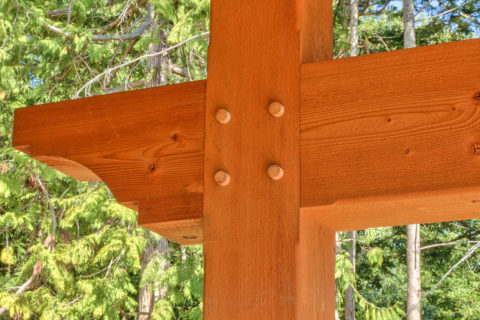
One of the most common questions I get about contemporary timber framing is: how do you get rid of the knee braces?
The knee brace is a diagonal member that connects a post to a beam. It stabilizes the joint and keeps the frame from racking. Traditional timber framing relies on it — you see them in almost every post-and-beam home built in the last century. They work. They’re also one of the main reasons traditional timber framing looks the way it does: angular, braced, rustic in a specific way that’s hard to get away from.
Removing them is a design choice that requires an engineering solution. The stability they provide still has to come from somewhere. In contemporary timber design, the answer is usually joinery — specifically the kind of precise mortise-and-tenon connections developed in Japanese timber construction over centuries.
Japanese timber joinery achieves structural stability through the geometry and precision of the joint itself. The pieces interlock in ways that resist racking and rotation without needing a diagonal brace to hold the angle. When it’s cut to the right tolerances — which requires CNC precision, not hand-fitting — it produces frames that read as clean, minimal, and thoroughly modern.
The West Coast Contemporary project in North Vancouver used this approach deliberately. The architect, Maureen Berris, wanted the timber to read as elegant rather than rustic — no knee braces, clean sight lines, a frame that felt light even though the sections were heavy. The Japanese joinery approach made that possible. The connections do the structural work. Nothing announces itself.
It’s not the right approach for every project. For a traditional lodge aesthetic, the knee brace belongs. But for contemporary mountain architecture — where the goal is timber warmth without timber heaviness — it’s the right tool.